Hookup DVD Player with HDMI
HDMI connections have
become popular with the advent of digital
TV. Newer DVD players can have video up-conversion and use a HDMI connection
to up-convert the standard 480 resolution DVD video to something closer to High Definition
video resolutions. HDMI can carry High Definition video as well as the newer
digital audio, in fact HDMI is required to carry the newest digital audio
and your Audio/Video Receiver must be compatible.
Any A/V receiver bought within the last two years should have the new audio decoders built-in and have HDMI capability.
The newer HD lossless audio formats are:
In addition to HDMIs ability to support high-bandwidth uncompressed
digital audio and all currently-available compressed formats (such as Dolby Digital and DTS), HDMI 1.3 adds support for
new lossless compressed digital audio formats such as Dolby TrueHD and DTS-HD Master Audio.
HDMI
HDMI (high definition multimedia interface) is capable of
carrying both video and audio signals. HDMI can carry
multi-channel digital audio and high-definition video all on
one cable. To use this type of connection, your TV or A/V
Receiver must have a HDMI jack and your DVD player must have a
HDMI output jack, plus you will have to buy a HDMI cable as
they are not usually supplied with DVD
players. HDMI cables do not have to cost much.
A good HDMI cable 6 feet or 10 feet long can cost around $10.
Look at Monoprice.com for all kinds of cables including HDMI cables. Monoprice.com
HDMI (High-Definition Multimedia Interface) is a
digital video connectivity standard designed as a successor to
DVI; can transmit both uncompressed digital audio and video
signals; protected by HDCP digital copy protection. HDMI will
be included more and more in HDTVs, DVD players and recorders,
A/V receivers, and home theater-in-a-box systems. The good
news for those with sets equipped with the older DVI setup is that DVI and
HDMI are (theoretically) compatible; you just need a
DVI-to-HDMI adapter cable.
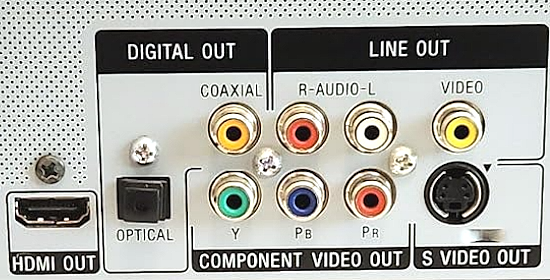
DVD Player Rear Panel
HDMI
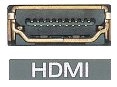
HDMI ports
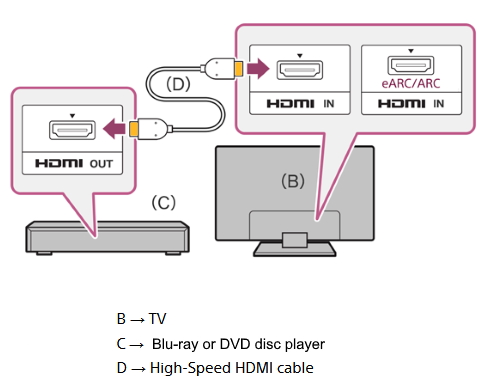
Figure 2 Direct Connection to TV HDMI
Select the correct HDMI input on the TV
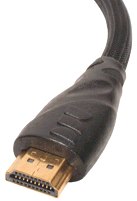
HDMI CABLE
HDMI, which was
conceived as the successor to DVI, for the passage of digital
video signals also has the capability to carry uncompressed
digital audio and video signals together through the use of
one cable and connector. This means that it has the
potential to bypass all other digital audio connectors
including coaxial and optical (TosLink) and IEEE-1394.
With
5.1 HDMI included in A/V Receivers, DVD players/recorders
(including Blu-ray and HD DVD players), Satellite Receivers
and Cable HD Receivers, it would eliminate the need for
digital audio coax and optical and IEEE- 1394 to carry
digital audio signals. It also makes it easy for the
consumer to attach one cable instead of several from their
Satellite/Cable HD Receiver, and DVD player to A/V Receiver to
TV. However, audio and video products that utilize HDMI may
only pass 2.0 digital audio, not 5.1 surround
sound audio. These products include A/V Receivers, DVD
players/recorders and HDTVs.
Many HDTVs now include HDMI input(s), and some DVD players
include HDMI output.
Sending both digital audio and
video signals directly to the TV via HDMI does simplify
matters. Audio, on the other hand, from that DVD player
may only be sent at Dolby Digital 2.0 level to be handled by
the TVs internal audio system.
If you thought that by sending those audio signals via HDMI
to an A/V Receiver using HDMI inputs, it would process Dolby
Digital 5.1 and DTS, you may be mistaken. Those products
may only pass/receive Dolby Digital 2.0 audio.
To obtain
5.1 surround sound, you may have to use either the digital
audio connectors from your DVD player or
Satellite TV Receiver. Of course, to obtain the best
digital video and digital audio signals overall, you would
simply send video HDMI signals to the display directly, and
digital audio signals directly to the A/V Receiver or
Processor using the digital audio connectors of both
products.
Newer versions of satellite TV and cable HD Receivers may
include 5.1 audio HDMI capabilities. You will have to
check to make sure. Most A/V receiver manufacturers began offering HDMI with 5.1-channel capability
between 2005 and 2007, with wide adoption of HDMI audio support becoming common in receivers around 2008.
While HDMI 1.0 (2002) supported up to 8 channels of audio, early HDMI receivers (2003–2004) often only used HDMI
for video switching, requiring optical or coaxial audio cable connections for surround sound. By 2010, almost all TV and
Audio Video Receivers had standard surround sound support for 5.1 multi-channel audio.
TV manufacturers started including 5.1 HDMI capability
with 2006 sets, and added multiple HDMI inputs to
accommodate numerous video products with HDMI
outputs. Buyers of new DVD and audio products with HDMI
capability will have to ascertain if it passes 2.0 digital
audio or true 5.1 digital. Most new products support 5.1 or higher audio.
Soundbar connection for better audio. The HDMI ARC/eARC connection from TV to soundbar allows audio from the TV and video to the TV as
this is a two-way path. Think of HDMI ARC/eARC as an expressway for video going in one direction and a bike path for audio going in the opposite
direction.
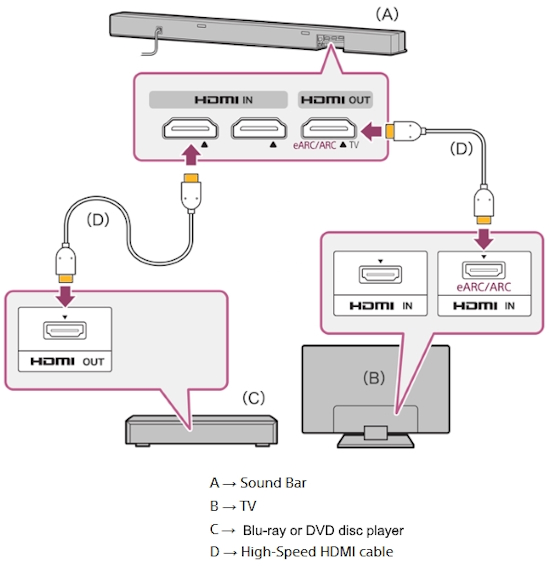
Surround sound (Soundbar) with video passing to TV.
For true surround sound use an Audio Video Receiver with at least six speakers and optical or coaxial audio inputs or use HDMI.
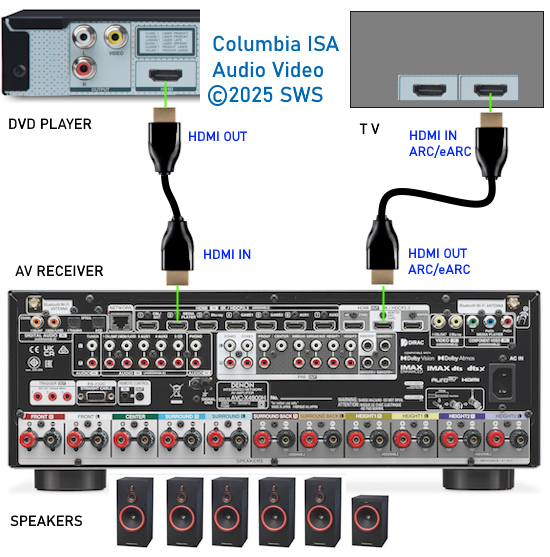
Select the correct source input on the A/V Receiver and select the correct HDMI input on the TV.
On the player, go to audio settings. You can switch between PCM for stereo or Bitstream for Dolby Digital/DTS for surround sound.
I am not getting surround sound, what is wrong?
To get surround sound, you need to check and adjust settings on the following:
The player, the TV, the A/V Receiver and the Input/Output ports. If any one setting is incorrect, you may not get surround sound. All the correct settings must work
together to get surround sound. Also, you need to be sure that you are using a quality "High Speed" or "Ultra High Speed" HDMI cable.
For a Blu-ray or DVD player connected to a smart TV using an HDMI cable and the TV output (HDMI or Optical)
connected to a modern A/V Receiver or soundbar:
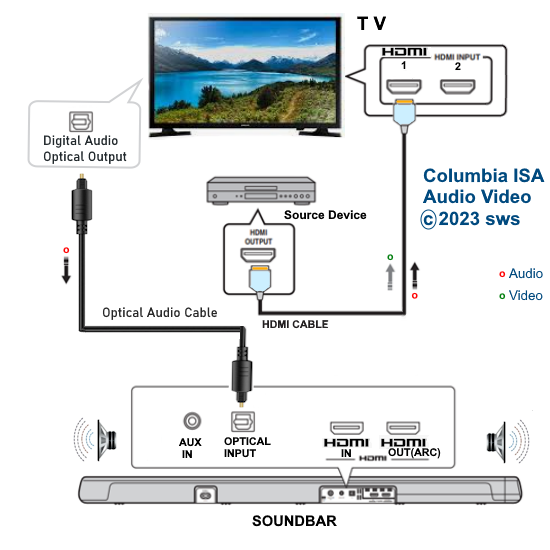
1. The DVD must have been created with a surround sound audio track. Most movies have surround sound but you must select the correct audio track/language
in the DVD MENU. Most DVDs will have audio tracks in several languages but only one may have surround sound. The others may only have stereo. On the player,
select the main menu, go to languages, then select ENGLISH for example in order to get the surround sound audio track.
2. The "HDMI Input" cable connection into the TV should be set to AUTO or Bitstream, not PCM.
3. The TV SOUND OUTPUT settings should be set to External Speaker or Wired Speaker if using an A/V Receiver and also the HDMI output or Optical output,
whichever one you connect to the A/V Receiver, should be set to PASSTHROUGH or Bitstream, not PCM. The "AUTO" setting may not work.
The TV may have multiple settings for this such as SOUND OUTPUT and Advanced Settings or Expert Settings.
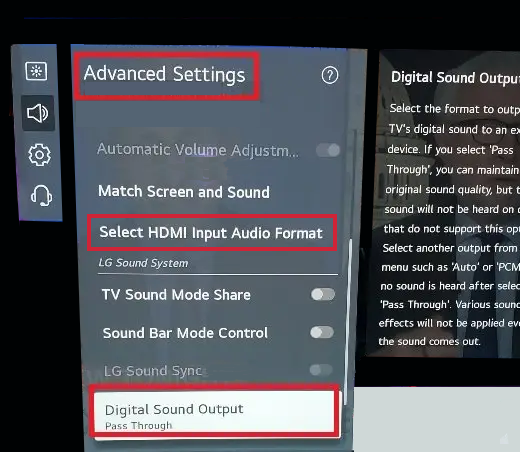
Select the HDMI input audio format
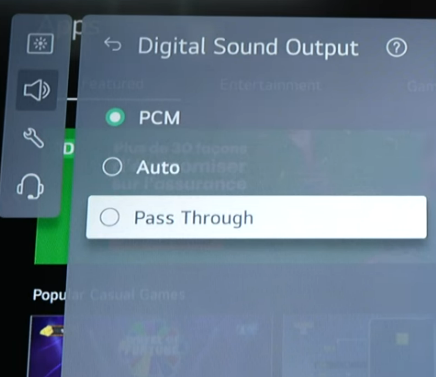
Select the digital audio output format
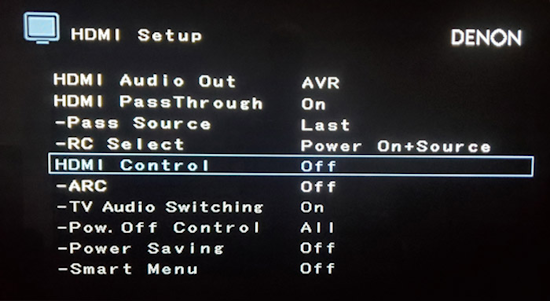
If using the HDMI connection, you may need to enable HDMI ARC (Audio Return Channel) and HDMI CEC (consumer electronics control)
which many manufacturers call by different brand names. Samsung for example calls it AnyNet+ while LG calls it SimpLink.
What is HDMI CEC?
CEC, or Consumer Electronics Control, is a protocol within the HDMI standard that enables
HDMI-connected devices to send and receive commands through a single HDMI cable. In simpler terms, CEC lets compatible devices talk to each other.
Volume control, Power control from the TV remote can be sent to other HDMI connected devices.
Note: HDMI CEC has been known to be potentially problematic.
Not all HDMI devices are CEC-enabled, and even when they are, some manufacturers implement the feature differently, causing issues.
This can lead to inconsistent functionality across devices from different brands.
HDMI devices with the newer HDMI eARC standard are supposed to eliminate these potential issues.
On most TVs and A/V receivers, you need to first turn on the HDMI-CEC feature in order to enable the ARC feature.
The newer version of ARC called eARC can work even without HDMI-CEC being enabled, but it's a good idea to make sure HDMI-CEC is enabled anyway.
You can always turn it off later.
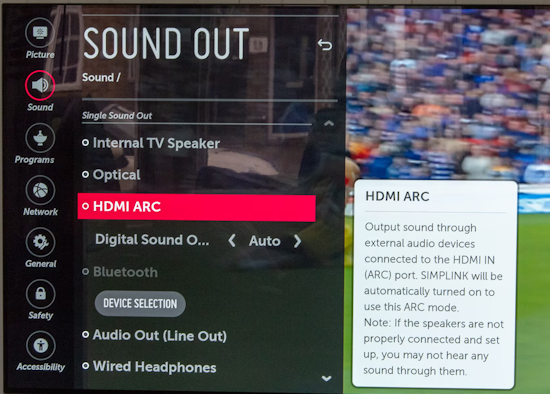
LG TV enables CEC (SimpLink) automatically when selecting HDMI ARC sound output.
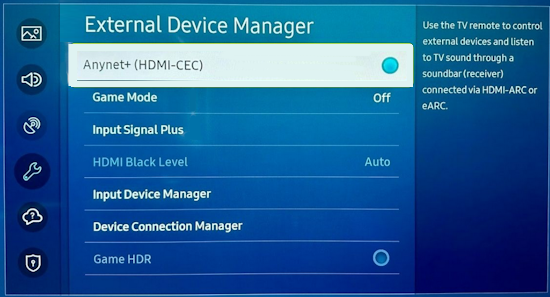
The newer products
which support HDMI eARC (enhanced ARC) often do not need HDMI CEC manually enabled but you may need to enable HDMI eARC.
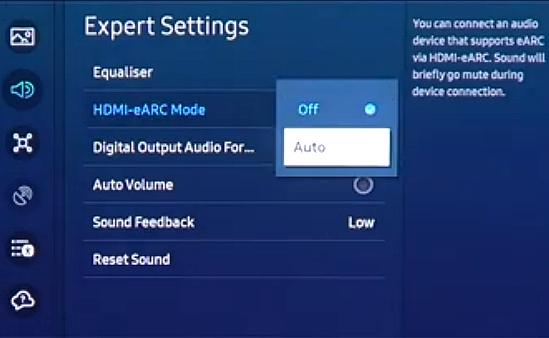
Enable HDMI-eARC Mode - Samsung TV
HDMI eARC also supports the uncompressed higher quality
audio formats such as Dolby TrueHD often found on Blu-ray movies.
(Your TV must support Dolby TrueHD "passthrough" unless connecting directly to the A/V Receiver.) The optical and coaxial digital audio connections do not support
Dolby TrueHD or DTS X.
4. The A/V Receiver must be set to the source input which relates to the HDMI or the Optical input. For example, the optical input may need the "DVD" source
input selected.
5. When using the HDMI connection on newer AVRs, the A/V Receiver may need to have the HDMI options selected correctly to process surround sound.
7 Ways to Connect TV to Audio System
1. Best: HDMI cable using eARC HDMI port from TV to Audio System
2. Better: HDMI cable using ARC HDMI port from TV to Audio System
3. Good: Connect all Sources to A/V Receiver or soundbar using HDMI, with HDMI cable out to TV for video
4. Good: Fiberoptic digital audio cable from TV to audio system
5. Limited: Analog audio cable from TV to audio system
6. Limited: Digital Audio Converter to convert fiberoptic output or HDMI ARC port to fiberoptic digital or analog sound
7. Limited: Connect sources to TV using HDMI for video. Connect audio outputs of sources to receiver or soundbar
How do I know if I am really getting surround sound?
A/V Receivers have a front panel display. If you are receiving surround sound, the display should show all the individual channels and also the display should show
a text description such as "Dolby Digital". Some Receivers also have an indicator light which comes on when receiving multi-channel audio. While playing the DVD
in different sections, you can listen to the center channel speaker for dialog and the surround speakers for ambient sound. It becomes obvious when
surround sound is present.
Toslink optical audio cables
More hookup Options ...
DVD How to Connect
DVD How to Connect 2
DVD How to Connect 3
COLUMBIA ISA Audio Video
Empowering consumers through information.
SWS
|