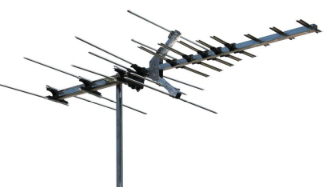
Broadcast TV is free TV delivered over the air from local TV towers to your TV antenna. Since 2009 when analog TV (NTSC) went to
digital TV (ATSC) many changes have taken place. Analog TV sets required a set-top-box to convert digital broadcasts to analog
for viewing. VCR tuners which are analog NTSC no longer could directly receive TV signals and also required a DTV converter box.
Most local TV stations left the VHF channels and went to UHF channels. Virtual channels and sub-channels have become the norm.
Virtual channels are the former channel numbers used to avoid confusion, for example if your local channel 5 was CBS and they converted
to UHF channel 38, the real channel, people could still see channel 5 on their TV display even though the broadcast is on channel 38.
Sub-channels are additional programs sent out from a TV station in any available space of the spectrum allocated to the TV station.
By using digital techniques, a TV station can send out multiple programs, say one high-definition and six standard-definition programs.
The main program in HD is for example 12.1 and the sub-channels are 12.2, 12.3, 12.4, 12.5 etc. with each being a different TV show.
TV antennas: The old VHF/UHF TV antennas are still good for digital broadcasts.
• Broadcast TV Antennas
• TV Antennas
• TV Antennas: How to Ground
• Channel Master
Free TV stations by State and tower locations. Also TV antenna buying guide.
Broadcast TV standards
• NTSC - the analog TV broadcast standard used for decades up until 2009.
• ATSC 1.0 - the digital broadcast TV standard used from 2009 and still used. TV sets usually have both NTSC and ATSC 1.0 tuners from 2009 to 2022.
• ATSC 3.0 - the newer digital TV broadcast standard being implemented over the next five years. Some TVs will have ATSC 3.0 tuners from 2022 and beyond
but expect ATSC 1.0 tuners to be included and even NTSC analog tuners in some TV displays.
TV stations
• Easy
HDTV Hookup Guide
• HDTV
Screen Size
• 4K TV 4K
TV
Major TV broadcast networks
CBS, ABC, NBC, FOX, PBS
The Federal Communications Commission (FCC) regulates U.S. radio, television, wire, satellite, and cable broadcasting to
ensure operations serve the "public interest, convenience, and necessity". It controls broadcasting through licensing,
spectrum allocation, and enforcing rules on content (indecency,, obscenity), ownership limits, and technical standards,
primarily under the Communications Act of 1934.
U.S. Television Stations (2026)
Commercial UHF: 1,040
Commercial VHF: 349
Educational UHF: 270
Educational VHF: 118
Class A UHF/VHF: 398
Low-power & Translators: Over 3,000.
Columbia ISA Audio/Video
Empowering consumers through information
Contact: columbiaisa@yahoo.com
• Bluray
Players, internet-enabled, Netflix movie streaming
• Cable
Types, audio/video for TV, explanation
• Hookup
diagrams, TV, VCR, DVD, Digital cable box
• DVD
Players reviews and Guide
• VHS
to DVD copy VCR tape to DVD disc
• How
to Hookup an Audio Video Receiver
|